
Zann Gill. Research Team, Centre Leo Apostel (CLEA), Vrije Universiteit Brussel (VUB) [Free University of Brussels] examining how collaborative intelligence applies in cases where the reductionist paradigm fails to address systemic, transdisciplinary complex systems problems.
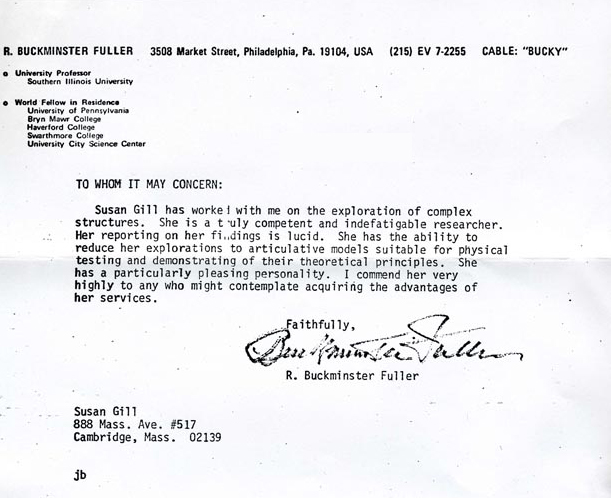
Short Bio. Zann Gill, M. Arch. Harvard, worked for Buckminster Fuller, whose World Game concept preceded, and anticipated, the public internet. She was later a Research Scientist for the Research Institute for Advanced Computer Science at NASA Ames Research Center, developing transdisciplinary programs, such as NASA University, for which she won an Incentive Award for Outstanding Performance. She carried out research in NASA’s Fundamental Biology program on the origin and evolution of life and how evolutionary principles underpin collaborative intelligence in human-A.I. computing and social networks. Gill’s talk on the origin of life at NASA.
Core Contribution. Her 2012 ACM CHI paper, User-driven collaborative intelligence, predicted the key role of human users in hybrid human-AI collaborative intelligence (C-IQ): “multi-agent, distributed systems where each agent, human or machine, is autonomously contributing to a problem-solving network.”[6] Gill’s ACM paper has been cited in applications ranging from an NIH (U. S. National Institute of Health) Center for Biotechnology study of human robot collaboration,[7] to an assessment of cloud computing tradeoffs,[8] and risk management, where preemption is an anticipatory action taken to secure first-options to maximise future gain and/or minimise loss.[9] Prediction of gain/ loss scenarios increasingly harnesses A.I. analytics and predictive systems to maximise collaborative intelligence. Other applications include study of social media and policing, harnessing computational approaches to enhance collaborative action between residents and law enforcement.[10] She holds several patents in the A.I. Division of the USPTO on system design.
Applications can overcome limitations in the standard model of collective intelligence, where a central controller broadcasts a question, crowdsourcing responses from distributed, anonymous responders:
- GAIL [Global Action Improv Lab] is evolving frrom a website into a knowledge platform to augment collaborative intelligence, inspired by the growth of Wikipedia to 296 Billion pageviews in 2024. Coalition-building around shared interests and initiatives requires safety for free speech and expression of individuality, reducing the “bandwagon effect” and supporting critical thinking and coalition-building, while avoiding groupthink consensus. Collaborative intelligence is a transdisciplinary method for complex systems problem-solving, from the origin of life to artificial intelligence, from science to the arts. The mission of GAIL is to evolve into a next generation social/ knowledge network that can help to coordinate saving life on this planet. GAIL [Generative AI Lab & Library] focuses on A.I. and the arts. Gill’s invited talk for the UC Berkeley Centenary of the Noosphere describes the historical trajectory and rationale for her work on GAIL.
- Smart Cities: Kawasaki: Information City of the 21st Century global competition, sponsored by the Japan Association for Planning Administration and Mainichi News with ten ministries and three agencies of the Japanese government. Gill’s entry tied with Panasonic (then Matsushita Corp.) for first place and won the Award of the Mayor of Kawasaki. She proposed an Innovation Network comprising sixteen components as a testbed to promote cross-sectoral innovation. All sixteen components were autonomous but networked and collaborative. Gill’s invited talk on Smart Cities & Collaborative Intelligence.
Core Publications underpinning Current Research at VUB.
Gill, Z. 2018. PEG [Plastic Earth Game]: Ocean Plastic as a Complex System; ICCS. Internat’l Conference on Complex Systems, Boston. https://necsi.edu/iccs-2018-program-by-author#start
Gill, Z. 2013. The Other Edge of Ockham’s Razor: The A-PR Hypothesis and the Origin of Mind. In: Biosemiotics. Special Issue. “Origins of Mind” edited by Liz Stillwaggon Swan and Andrew M. Winters, Dordrecht, Springer. DOI: 10.1007/s12304-013-9176-6 https://link.springer.com/journal/12304/volumes-and-issues/6-3
Gill, Z. 2013. Wikipedia: Case Study of Innovation Harnessing Collaborative Intelligence. In: The Experimental Nature of New Venture Creation: Capitalizing on Open Innovation 2.0, edited by Martin Curley and Piero Formica. Dordrecht, Springer. https://link.springer.com/chapter/10.1007/978-3-319-00179-1_12
Gill, Z. 2012. User-Driven Collaborative Intelligence: Social Networks as Crowdsourcing Ecosystems. ACM CHI (Computer Human Interaction). May 5 – 10, 2012. Austin Texas. https://dl.acm.org/doi/10.1145/2212776.2212794
Gill, Z. 2012. A Response to Darwin’s Dilemma: A-PR cycles and the origin of design in nature. In: Seckbach J, Gordon R, and Swan, L (eds). The Origin of Design in Nature. Dordrecht, Springer. 509 – 524. https://content.e-bookshelf.de/media/reading/L-618698-6cfa3006c2.pdf
Gill, Z. 2011. The A-PR Hypothesis: Autonomy and Pattern Recognition in the Origin of Life. Origins 2011, ISSOL International Society for Study of the Origin of Life & Bioastronomy Joint International Conference; Montpellier, France. https://pmc.ncbi.nlm.nih.gov/articles/PMC2691805/
Gill, Z. 2011. Collaborative Intelligence in Living Systems: algorithmic implications of evo-devo debates. GECCO. International Conference on Genetic and Evolutionary Computation (combining the 20th International Conference on Genetic Algorithms ICGA & 16th Annual Genetic Programming Conference. July 12 – 16, 2011. Dublin, Ireland https://www.semanticscholar.org/paper/Collaborative-Intelligence-evo-devo-mechanisms-to-Gill/841af2edad27c8f34de01bfc99db4eddebca9a27
Gill, Z. 2002. Origin of Life: Case Studies of Hypothesis Construction, ISSOL 2002, International Conference on the Origin of Life, Oaxaca, Mexico. June 30 – July 5. https://ui.adsabs.harvard.edu/abs/2003OLEB…33..280G/abstract
Gill, Z (SP). 1986. The Paradox of Prediction. Daedalus: Journal of the Academy of Arts and Sciences. 115. 3. 17 – 49. (issued as a book by Academic Press) https://www.jstor.org/stable/20025060 Reviewer: Ernst Mayr, Evolutionary Biologist, Harvard.
Research Related to NASA Work on CPSEs [Collaborative Problem-Solving Environments]:
Gill, Z. 2002. Webtanks for Knowledge Management: web-based collaborative learning environment. Computer-Supported Cooperative Learning (CSCL). https://dl.acm.org/doi/10.5555/1658616.1658746 and https://repository.isls.org/handle/1/3872 and https://www.taylorfrancis.com/chapters/edit/10.4324/9781315045467-132/webtanks-knowledge-management-web-based-collaborative-learning-environment-zann-gill
Gill, Z. 2002. Designing a Think Tank to Study Design paper #4941 AIAA Space Architecture Symposium. Houston, Texas. Section: Design Analysis, Methods, & Theory. https://spacearchitect.org/pubs/AIAA-2002-6103.pdf
Gill, Z. 2001. Webtanks: Tools for Learning by Design. ACM. Siggraph. https://history.siggraph.org/wp-content/uploads/2022/07/2001-Educators-Forum-Gill_Webtanks.pdf
Gill, Z. 2001. Webtank Design: intranet support for collaborative problem-solving; HCI International. New Orleans, later published in Systems, Social, and Internationalization: Design Aspects of Human Computer Interaction vol 2. Ed. M. Smith & G. Salvendy. N.J.: Lawrence Earlbaum. 292-6. https://searchworks.stanford.edu/view/5081081
Gill, Z. 2001. Invited chapter “Simulating the Future: Computing and Speculation” in the book To Mars and Beyond: Search for the Origins of Life, published by the National Museum of Australia. https://catalogue.nla.gov.au/catalog/3029742
Gill, Z. 2001. BEACON [Bio-evolutionary Advanced Concepts for NASA] https://ntrs.nasa.gov/api/citations/20030068519/downloads/20030068519.pdf (page 9, 74-75, 150)
Gill, Z. 1999. A Design Method using Darwinian Principles for Collaborative Problem-Solving Environments (CPSEs) (Computer-Supported Cooperative Learning). Stanford University. https://dl.acm.org/doi/abs/10.5555/1658616.1658746
Media as a Vehicle to Crowd-source Collaborative Intelligence
POW! [Power Our World] Media – https://pow.earthdecks.com Writer Director of Award-winning Experimental Film. Hello-Yello World excerpted from her full length opera libretto “The End of the World.” Winner of 15 Awards including a Luis Bunuel Memorial Award for Best Original Music and L’Age d’Or International Film Festival Award (top film award of 5 years).
Co-Founder of the ARQ [Arts Raising Questions] movement of artists, writers, media producers asking questions
Writer of four ARQ screenplays for feature films and associated fiction books (two historical fiction, two science fiction) – https://zanngill.com
- ALTON: Campaign to End Free Speech: Two Murders that Provoked Lincoln to Run for President
- 1848: Margaret Fuller, world’s first woman foreign war correspondent covering the Revolution of 1848 in Italy
- ALICE in Cinderland: when weather changed the world
- SQUID: a clone of Thomas More and his fake news
Other Activities:
Lifeboat Foundation Advisory Board Member – https://lifeboat.com/ex/bios.zann.gill
Orcid ID: 0009-0005-1563-6284
Email: zann.gill@vub.be